Conservation6 min readUpdated October 2026
Catch and release in Costa Rica: how billfish are released
Why sailfish and marlin always go back to the ocean, how a release works step by step, how to get your photo, and which fish you can keep for the table on a charter from Quepos.
Why billfish always go back
Sailfish and marlin are the reason many anglers travel to Costa Rica's Pacific coast. Releasing them protects the fishery that makes Quepos one of the best places in the world to catch them, and a fish that goes back alive can be caught again by another angler, on another day.
That is why billfish are always released on every charter from Marina Pez Vela. The fight, the jumps and the photo are the trophy.
Release or keep: fish by fish
Here is how it works for the main species you can catch off Quepos, with their best months:
| Species | Best months | Release or keep |
|---|---|---|
| Sailfish | Peak December to April; present most of the year | Always released |
| Blue marlin | December to April | Always released |
| Striped marlin | Occasional, mostly December to April | Always released |
| Roosterfish | Year-round, strongest December to April | Released by default |
| Yellowfin tuna | May to November | Can be kept when regulations allow |
| Mahi-mahi | May to October | Can be kept when regulations allow |
| Wahoo | November to March | Can be kept when regulations allow |
| Cubera snapper | Year-round | Can be kept when regulations allow |
| Red snapper | Year-round | Can be kept when regulations allow |
See photos and details of every fish in the Quepos species guide.
How a billfish release works
The goal is simple: a short fight, as little handling as possible, and a fish that swims away strong. A typical release goes like this:
- You fight the fish with the crew guiding you, so it reaches the boat without being exhausted.
- The mate takes the leader and brings the fish alongside, keeping it in the water.
- The hook is removed, or the leader is cut close to the hook if removing it would cause harm.
- You get your photo with the fish beside the boat.
- The boat moves slowly forward so water flows over the gills until the fish kicks and swims off on its own.

Your role as the angler
You do not need experience to release a fish well. The crew does the handling; what helps most is listening and staying calm when the fish is beside the boat:
- Follow the crew's instructions during the fight and at the boat.
- Keep your hands away from the bill: it is hard and sharp.
- Do not try to lift the fish out of the water.
- Decide before the trip who takes the photos, so no time is lost.
Getting the photo right
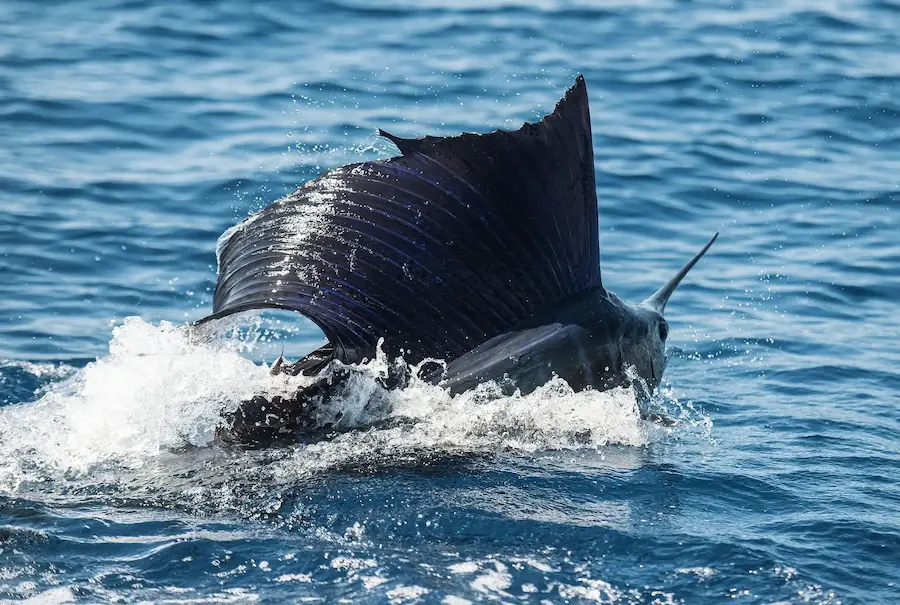
The best billfish photos show the fish in the water, lit up in blue and purple, with you leaning over the side of the boat. Have the camera or phone ready before the fish arrives, shoot a few quick frames and let the crew send it back. A few seconds of planning gets you a better photo and a healthier release.
What you can keep for the table
Catch-and-release does not mean going home empty-handed. Yellowfin tuna, mahi-mahi and wahoo offshore, and snapper and other bottom fish inshore, can be kept when regulations allow. Tuna and mahi-mahi are most abundant from May to November, so that is the best time if fresh fish is on your list. Check the month-by-month seasons calendar and tell your captain before the trip that you would like to keep some fish.
Billfish season off Quepos
Sailfish and marlin peak from December to April, and sailfish are present most of the year. To target them, choose one of the offshore charters: the 3/4-day (7 hours, $1,300) or the full day (9 hours, $1,550), both leaving Marina Pez Vela at 7:00. If it is your first time offshore, read what to expect on your first deep sea fishing trip, or compare all charters.
Good to know
Catch and release in Costa Rica: FAQ
Marina Pez Vela · Quepos
Ready to head out?
Pick your dates and your charter. Offshore, inshore, or a little of both.